A useful team workspace
Interfaces for the actual users, tasks and decisions involved, with the roles and permissions defined for the first release.
Markenity services
We build business software for the work a generic tool does not handle well, from proposal preparation and content publishing to connected internal applications.
The scope
A custom system is useful when the workflow, permissions or integrations matter enough to justify building and maintaining them. We first review what existing software can already do, then define the part that genuinely needs custom development.
What you get
Interfaces for the actual users, tasks and decisions involved, with the roles and permissions defined for the first release.
The agreed APIs, imports or integrations needed to connect records and reduce repeated entry between systems.
Documents, operational views or reports that support the workflow, with validation for the calculations and data that matter.
Project decisions
We work through users, decisions, data sources and exceptions. The specification identifies the roles, validation rules, integrations and outputs the first release must support. A useful initial release is bounded; it is not a promise to automate every department at once.
Our delivered work includes React and TypeScript interfaces, Node.js or Python backends and PostgreSQL-based data storage. We select the final stack after assessing the project rather than copying a list of tools into every proposal.
We review users, current documents, decisions, exceptions and the systems the application must connect to.
We implement the agreed workflow and review it with representative tasks before widening the scope.
We test permissions and failure handling, then document deployment, ownership and support responsibilities.
The practical details
Tests follow the risk: permissions and data changes, calculation rules, integration failures and the actions users rely on. We review the interface with real tasks and define how errors can be investigated.
Access control, secret handling, backups and deployment responsibilities are agreed for the actual hosting environment. No application is described as unhackable. Security and maintenance require ongoing ownership after delivery.
At handover
The agreed source and deployment material, operating instructions, access responsibilities and a clear boundary for support. We discuss ownership, recurring services and future changes before development begins. Bring sample documents or redacted workflow examples to make the first discussion concrete.
From our work
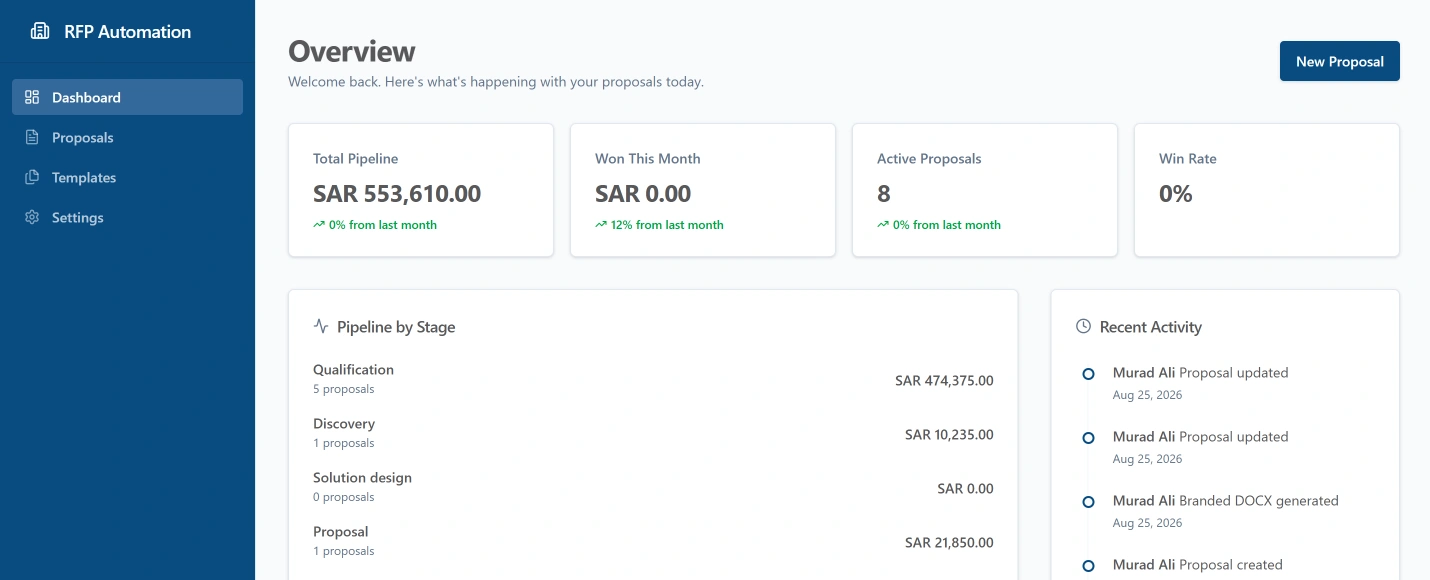
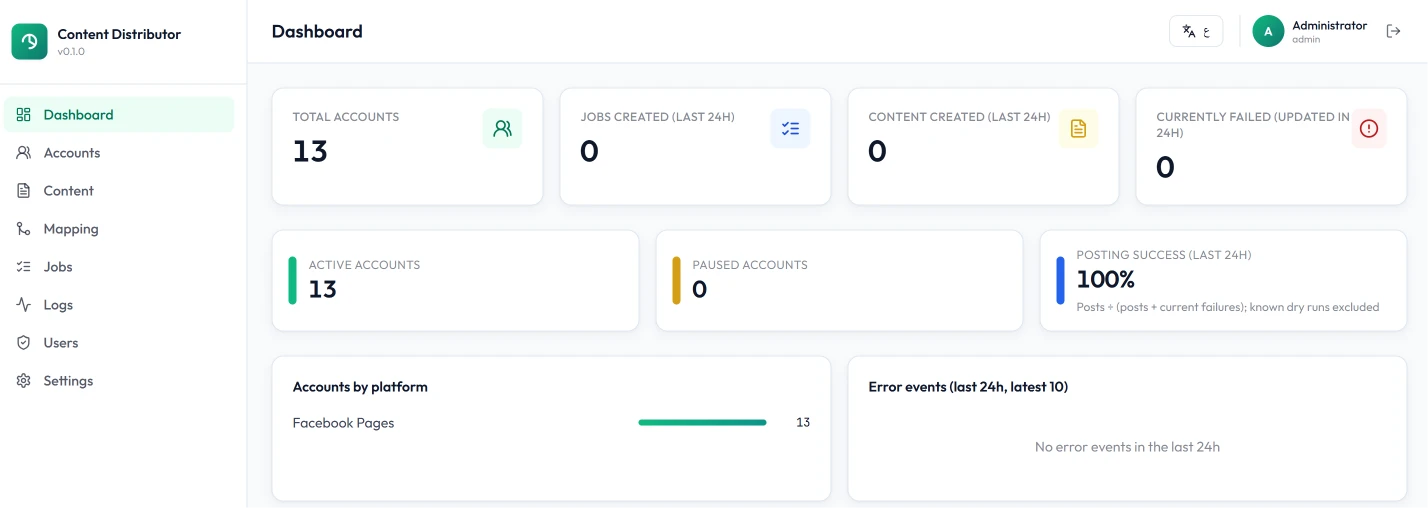
The homepage includes RFP Automation and a multilingual content distributor, with real interface screenshots and a description of their delivered functions.
Explore the work exampleBefore we begin
We start by reviewing what available software can already do. Custom development is scoped around the workflow or integration that needs more than a standard configuration.
Yes. We define a useful first release and a backlog of later work. This keeps responsibilities clear and gives the team something concrete to review before expanding.
Ownership, source handover, hosting and ongoing support are agreed in the proposal. We identify recurring services and access responsibilities before development begins.
Talk to Markenity
Tell us what your company needs. We can talk through the requirements and a sensible next step.